
5 things to know before buying floor care equipment
You're standing in front of a wall of vacuums, or scrolling through pages of floor care machines online, and they all look the same. One's $200, another's $800, and you can't tell what the difference is besides the brand name. You don't want to waste money on something that breaks in six months, but you also don't want to overpay for features you'll never use. The problem is that most buying guides assume you already know what matters.
Here's what to know before you spend a dime on floor care equipment. These five things will save you money, frustration, and buyer's remorse.
Match the machine to your floor type first
Your flooring type is the single most important factor when choosing floor care equipment, and getting it wrong means you'll either damage your floors or waste time pushing a machine that can't do the job.
Canister vacuums excel on hardwood, tile, laminate, and vinyl because they offer strong suction without the heavy brush roll that can scratch smooth surfaces. If you have wall-to-wall carpet or thick area rugs, an upright vacuum is the better choice because the vacuum's weight over the powerhead digs deeper into carpet fibers.
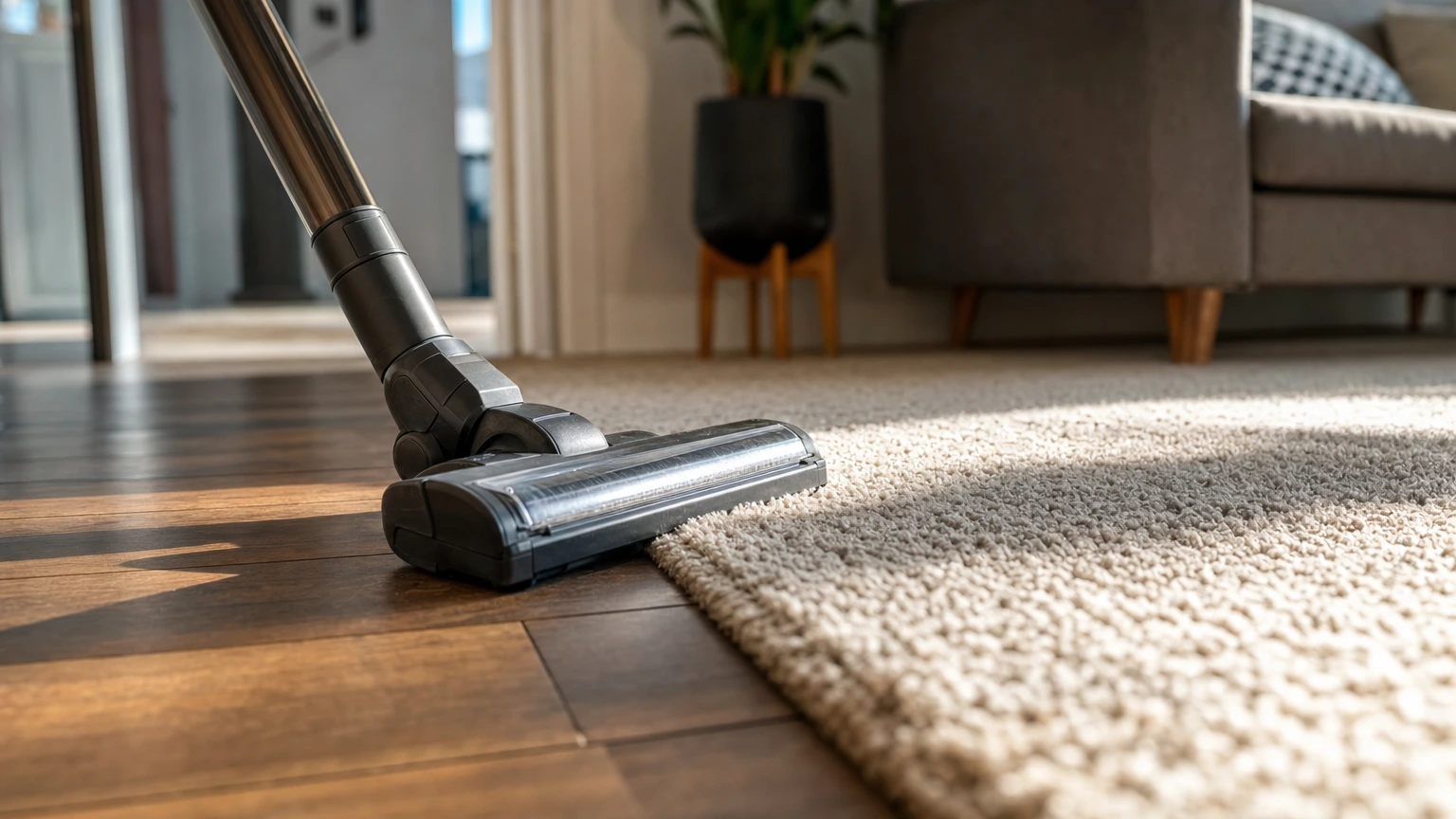
For mixed flooring, look for adjustable brush roll settings. Turn the brush roll off on bare floors and on when cleaning carpets. Machines without this feature force you to choose between scratching your hardwood or leaving dirt in your carpet.
Commercial spaces with large hard floor areas need different equipment entirely. Walk-behind scrubbers, rotary buffers, and wet-dry vacuums handle the square footage and soil load that residential machines can't touch. If you're managing a retail space, office, or light industrial facility, don't try to scale up a household vacuum. It won't last.
Suction power matters less than you think
Every manufacturer wants to brag about suction power, but the stated suction numbers on vacuums are less useful than floor head mechanics and brush agitation in terms of actual performance.
Airflow is the best specification that demonstrates cleaning ability, not motor wattage or amp ratings. Wattage only indicates how much electrical power the motor consumes, it does not directly measure cleaning performance. A well-designed vacuum with optimized airflow can outperform a higher-wattage model that uses more electricity but has poor engineering.
What matters more is how the machine moves dirt from the floor to the bin. Airflow is what moves the dirt from surfaces to the dust bag or container, and in short, airflow is the best specification that demonstrates cleaning ability. For canister vacuums, airflow of 100 CFM or more and water lift of 90 inches or more is recommended.
The brush roll design, the floorhead seal, and the path width all affect how much dirt you pick up per pass. A machine with strong suction but a poorly designed floorhead will leave dirt behind. A machine with moderate suction and a well-engineered head will clean better every time.
Filtration is critical if anyone in your home has allergies
Models with HEPA filters are effective at reducing airborne particles, which helps people with allergies or respiratory issues.
But here's the catch: a HEPA filter alone doesn't solve the problem, the vacuum must also have a good seal to trap all the air and force it through the HEPA filter. Without that seal, dirt escapes through gaps in the housing and gets pumped straight back into your air.
Vacuums that use HEPA filters in a completely sealed system mean there is virtually no leakage of air through the housing or fittings, and all air (along with pollutants) is forced through the filtration system, leaving your indoor air allergen-free.
If allergies are a concern in your home, look for sealed filtration systems, not a HEPA filter sticker on the box. Many manufacturers will call it "complete seal filtration" or "sealed system" in the product description. That's what separates a machine that traps allergens from one that moves them around.
Bagged vacuums tend to hold more, and replacing a filled bag releases less dust and fewer allergens into the air than emptying dirt from a bin. If you're sensitive to dust, a bagged model with a sealed system is worth the ongoing cost of replacement bags.
Maintenance requirements will determine whether you keep using it
All vacuum cleaners require regular maintenance, and neglecting this can reduce the vacuum's effectiveness and lifespan. Be prepared to clean or replace filters, belts, and brush rolls as recommended by the manufacturer.
The difference between a vacuum that lasts eight years and one that dies after two is usually maintenance, not build quality. Filters clog, belts stretch, brush rolls tangle with hair, and dust bins need emptying. If the machine makes any of those tasks frustrating, you'll skip them, and performance will drop fast.
Look for machines with tool-free maintenance. Can you pull the brush roll out without a screwdriver? Can you rinse the filter under a faucet? Can you empty the bin without touching dirt? These aren't luxury features, they're the things that determine whether you'll do the maintenance at all.
Check whether replacement batteries are readily available. Being able to replace the battery instead of the entire vacuum cleaner can significantly reduce long-term ownership costs, and it's a good idea to confirm that replacement batteries, filters, and accessories are sold locally.
For commercial equipment like floor scrubbers or rotary buffers, parts availability matters even more. A machine that sits idle waiting for a replacement squeegee or pad driver is costing you money every day. Choose brands with local service support and stocked parts inventory.
Budget for what you're going to use, not what's on sale
Higher prices often mean more features and better build quality, but that does not mean you can't find budget-friendly options with great performance.
The mistake most people make is buying the cheapest machine that claims to do the job. You save $100 upfront, then spend $300 replacing it twice in three years. While upfront cost is a significant factor, investing a bit more in a high-quality vacuum often pays off in the long term, as it typically offers superior cleaning performance, durability, and reliability. A well-built vacuum can withstand years of regular use without losing efficiency.
Think about how often you'll use it, how much square footage you're covering, and what surfaces you're cleaning. A homeowner with 1,200 square feet of hardwood can get by with a lightweight canister vacuum in the $300 range. A business owner managing 5,000 square feet of tile and carpet needs a walk-behind scrubber or a commercial-grade upright, and trying to save money with a residential model will cost more in downtime and replacement.
Air Lion carries equipment across a wide range, from residential uprights to commercial wet-dry systems, because the right machine depends on what you're cleaning and how often. We'd rather sell you the machine that fits your situation than push the most expensive thing on the shelf. That's how you build a long-term relationship instead of a one-time sale.
Ready to find the right machine for your space?
If you've read this far, you're already ahead of most people shopping for floor care equipment. You know what questions to ask, what specs matter, and what traps to avoid. Now comes the easy part: matching those priorities to the right machine. We carry the variety to give you real choices, and we stand behind everything we sell with parts, service, and straight answers. Find the right vacuum for your home or business.